
From 16 to 27 September 2026, the 2026 "Reviving Craft — Chinese Intangible Cultural Heritage and Contemporary Design" exhibition, organised by Sun Media Group, will be held at Somerset House in London, UK. Under the theme "Reflection of the Mind", the exhibition is divided into three sections — "Clear the Mind", "Refine the Mind", and "Nourish the Mind" — drawing on the Confucian, Buddhist, and Daoist traditions of Chinese thought to articulate thethe Eastern philosophical idea that “observing objects is also a way of observing oneself”. Liangzhu culture has been invited to take part in the "Refine the Mind" section, bringing the essence of five thousand years of Liangzhu jade ritual culture alongside contemporary aesthetic reinterpretations to the UK. It thus serves as a major cultural highlight of the exhibition that "refines the mind through the ancient and bears witness to history through objects".
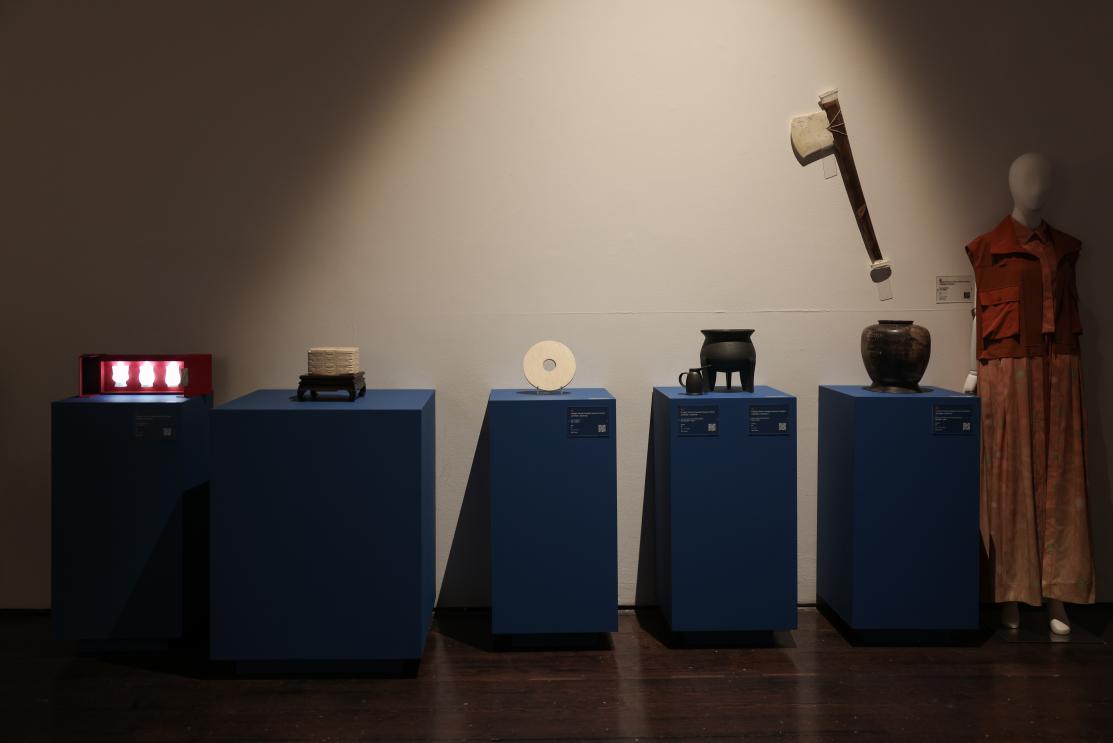
The Archaeological Ruins of Liangzhu City (c. 3300–2300 BC) served as the centre of power and belief for an early regional state in the Lower Yangtze and Lake Tai area of China. The site lies on the river-network plain at the eastern foot of Mount Tianmu, in the Yangtze River Delta of southeastern China, within present-day Yuhang District, Hangzhou, Zhejiang Province. In 2019, the Archaeological Ruins of Liangzhu City were officially inscribed on the UNESCO World Heritage List. As the centre of power and belief of Liangzhu culture, the site comprises a monumental city built between roughly 3300 and 2300 BC, an elaborate outlying water-management system, and hierarchical burial grounds including altars, together with unearthed artefacts dominated by jade objects symbolising belief and institutional authority. These discoveries reveal the existence of an early regional state sustained by rice-farming agriculture, marked by pronounced social stratification and a unified system of belief in the late Neolithic Lower Yangtze and Lake Tai region. It offers unique testimony to China's five-thousand-year history of civilisation, representing the highest achievement of a rice-based prehistoric civilisation in China more than 5,000 years ago and standing as an outstanding example of early urban civilisation.
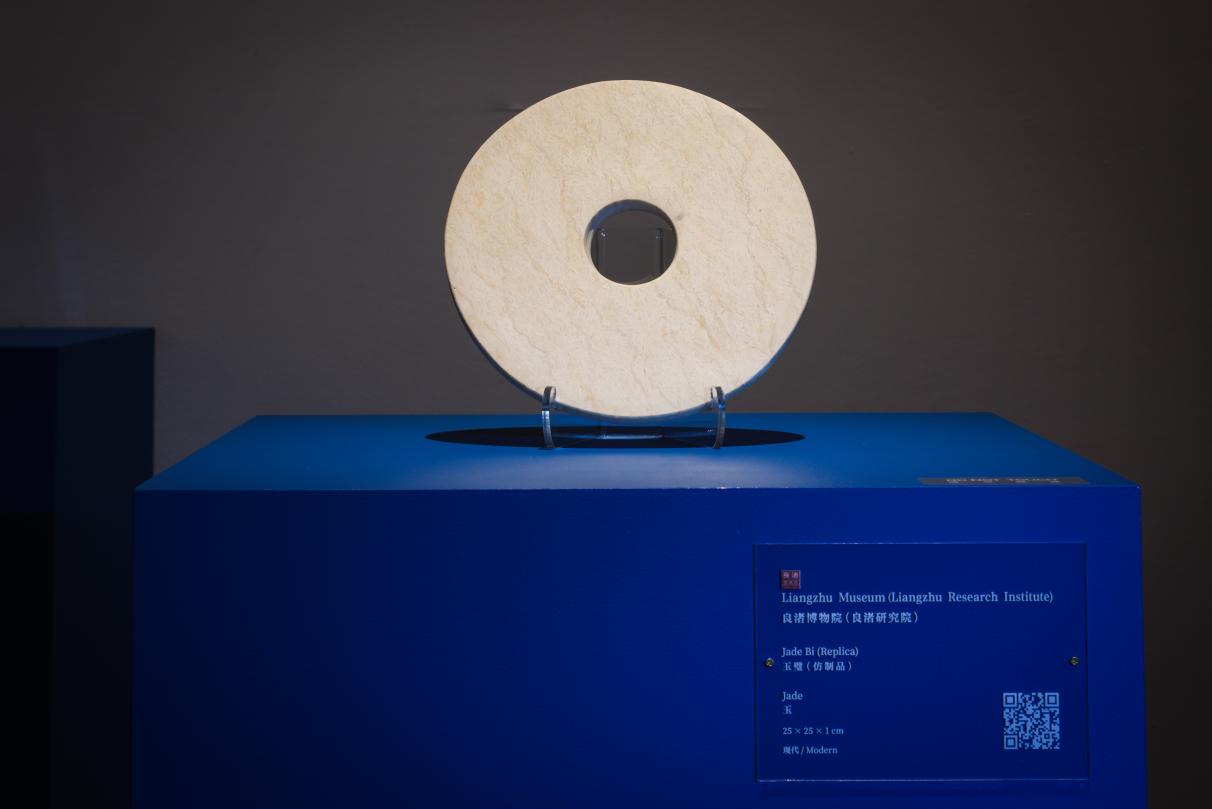
At Reviving Craft in London, a curated selection of replica artefacts brings the brilliant achievements of Liangzhu civilisation into full view. Among the Liangzhu jade objects, shaped around the core design elements of the square and the circle, the cong and the bi stand out as important vessels embodying the spiritual beliefs and cosmology of the Liangzhu ancestors. Their minimalist forms distil a profound sense of the order of heaven and earth, while the finely balanced "sacred emblem", neither too elaborate nor too plain, underscores their solemn ritual significance. Embodying breadth alongside precision, and lofty vision alongside restraint, these creations, possessed of a formal beauty and enduring spiritual resonance that transcend time, represent another precious legacy left to us by the Liangzhu ancestors five thousand years ago.
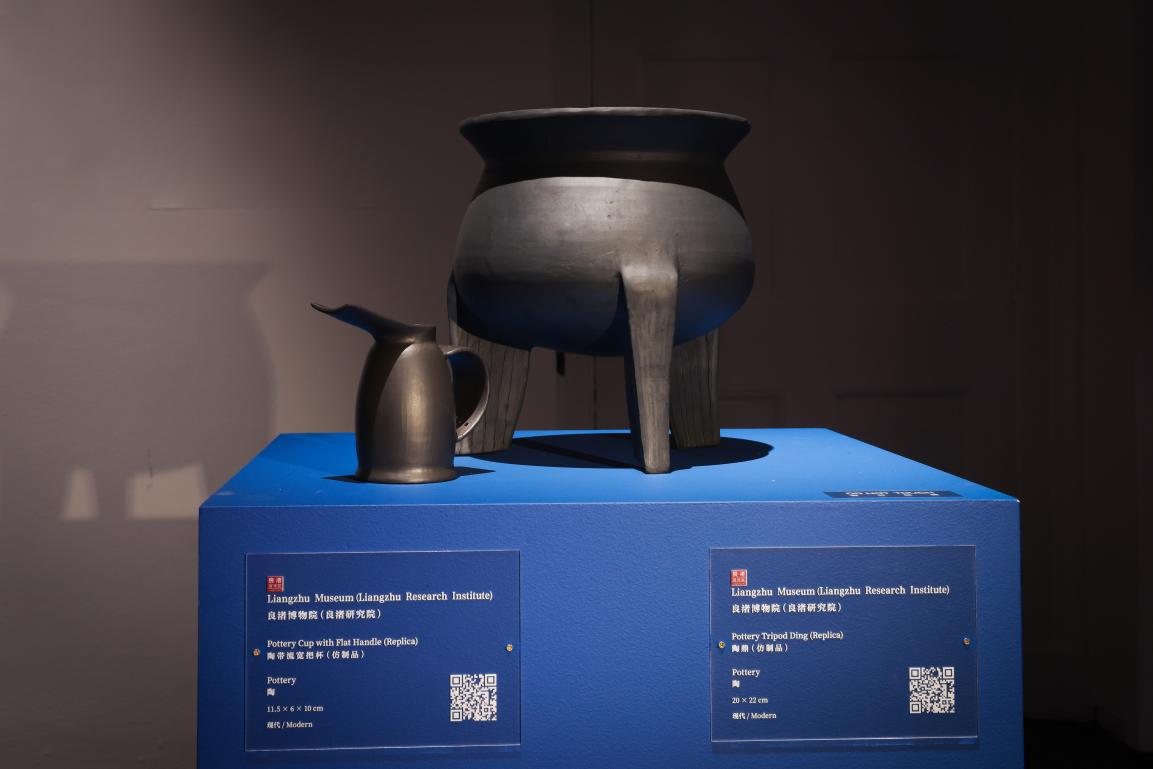
Notably, the Pottery Jar with Inscribed Symbols bears twelve consecutive primitive symbols incised on its shoulder and upper belly, regarded by scholars as one of the earliest embryonic forms of Chinese writing. Also on display are the Pottery Cup with Flat Handle, valued for both its practicality and its aesthetic appeal, and the Pottery Tripod Ding, a classic cooking vessel, offering a glimpse into the rice-farming civilisation and everyday life of the Lower Yangtze and Lake Tai region thousands of years ago. Through their silent language, these objects present London audiences with the highly developed social organisation, system of kingship, and spiritual world of Liangzhu society.
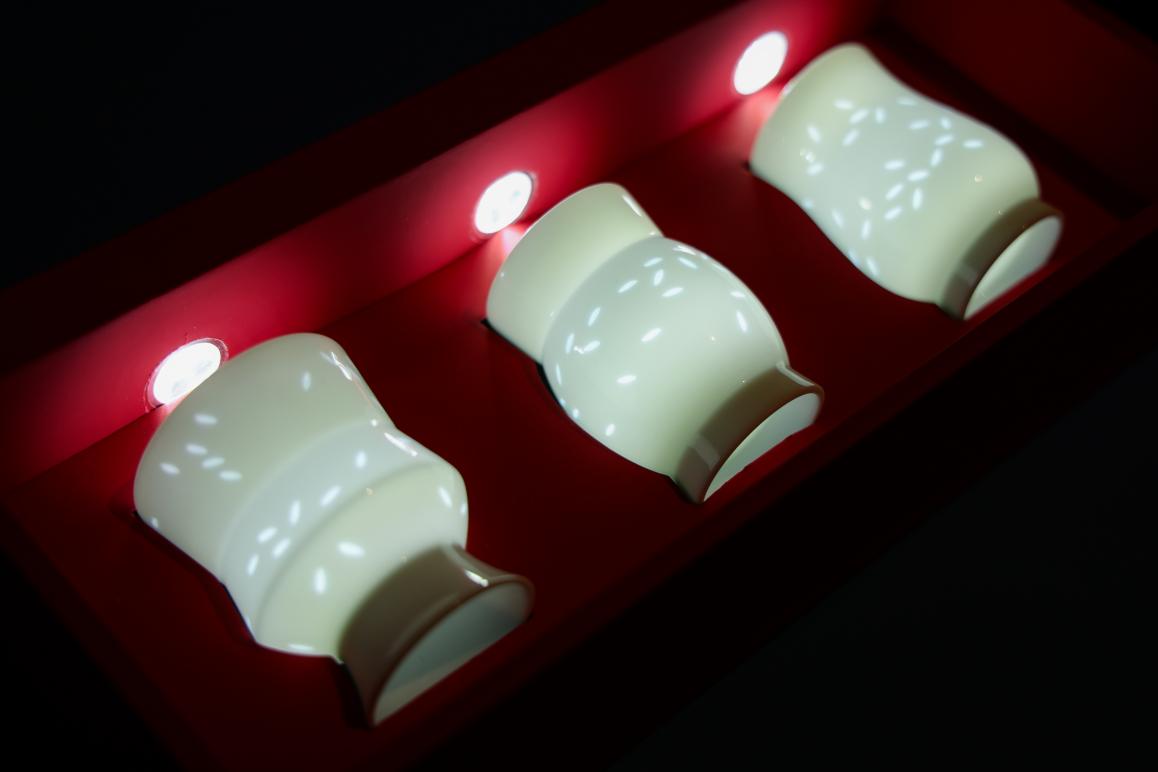
Beyond the classic jade and pottery pieces, the exhibition also features Liangzhu-themed fashion apparel, Liangzhu cultural and creative products, and paper umbrellas incorporating Liangzhu design motifs. These contemporary works all draw inspiration from artefacts unearthed at Liangzhu. In London, ancient objects and contemporary craftsmanship engage in dialogue side by side, vividly illustrating how Liangzhu culture has moved from archaeological site to everyday life in the present day.
In recent years, Liangzhu has consistently maintained an open approach to exploring diverse pathways for sharing its civilisation, continually deepening exchanges with different civilisations around the world. From thematic presentations to experience -sharing, from academic dialogue to global touring exhibitions, Liangzhu culture has actively stepped onto the global stage, presenting the historical value and contemporary vitality of the Liangzhu site to the world in a full and multifaceted way, and making a five-thousand-year-old civilisation something that can be "sensed, touched, and co-created". This appearance at Reviving Craft Exhibition marks yet another vivid step in Liangzhu culture’s multifaceted efforts to reach international audiences .
From the ancient city of Liangzhu in Yuhang to Somerset House on the banks of the Thames, Liangzhu culture "connects minds through objects", and through this dialogue between Eastern and Western civilisations, helps the world understand what makes China, China.
© Affaires Officielles