
Three Chinese Classical Furniture artworks travel from Canton to London, unfolding an Eastern narrative of objects, craftsmanship and the cultivation of the mind.
On 16 September 2026, the 2026 "Reviving Craft - Chinese Intangible Cultural Heritage and Contemporary Design" ("Reviving Craft") exhibition, organised by Sun Media Group, will open at Somerset House in London. Under the theme "Reflection of the Mind" and drawing on the Chinese philosophical traditions of Confucianism, Buddhism and Daoism, the exhibition is structured around three sections — "Clear the Mind", "Refine the Mind" and "Nourish the Mind" — inviting audiences from around the world to experience the spiritual world embodied in craftsmanship through objects. YONGHUA FURNITURE, from Panyu, Canton, will present three reproductions of classical furniture forms, showcasing the structure, lines and literati sensibility of Cantonese hardwood furniture within the "Nourish the Mind" and "Refine the Mind" sections.
Furniture not only serves everyday purposes but also embodies the lifestyles and aesthetic judgements of different eras. The three pieces on display take classic forms as their starting point, bringing the craftsmanship of the past into a contemporary exhibition space. Through mortise-and-tenon joinery, proportion and detail, they open a dialogue on how objects enter daily life, and how they in turn reflect the human mind.
A Chair, a Pool of Autumn Waters
The Wave Pattern Spindle Low-Back Armchair (Single Slab) featured in this exhibition takes as its reference a form once held in the collection of Marcus Flacks, as seen at Christie's London in 2026. The original piece once circulated abroad; now, with the replica arriving in London, the overseas journey of a classical piece of furniture and the contemporary practice of Chinese craftsmen recreating it come together in the same city, creating an echo across time and space.
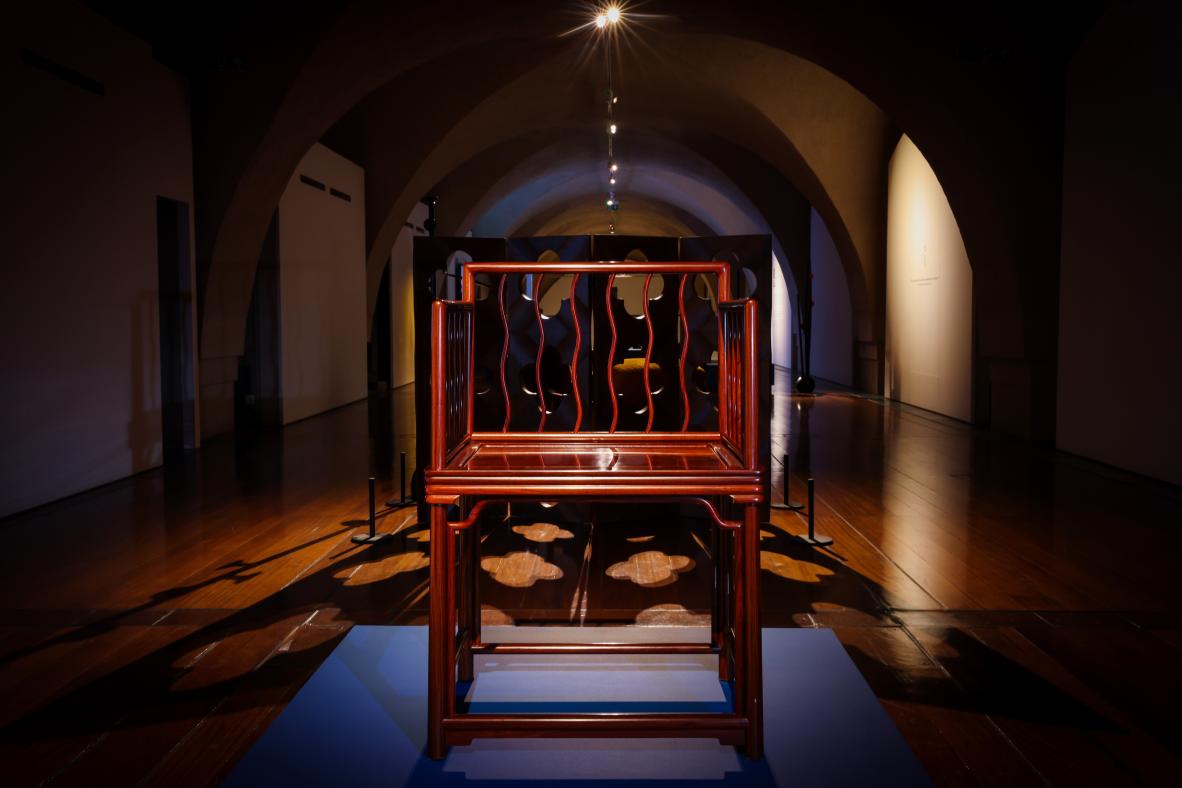
The chair is made from a single slab of Bobgunnia madagascariensis, its rounded members joined by mortise-and-tenon construction. The wave-pattern spindle motif on the backrest draws on the "rippling autumn waters" from Ma Yuan's Southern Song-dynasty painting Water Album, its lines flowing with both grace and rhythm. The fine hardwood, worked to evoke the form of bamboo, brings bamboo's light elegance to the wood's dignified texture, reflecting the traditional literati taste for naturalness and simplicity as the essence of refinement.
An Incense Stand, a History of Passage
The Five-Legged Circular Incense Stand (XIANGJI) with Base (Single Slab) takes as its model a piece offered at Christie’s Hong Kong autumn auction in 2022. The original piece passed through the hands of collectors across several countries; its podium-style structure and five-legged form clearly reflect the traditional emphasis on proportion and order in display furniture.
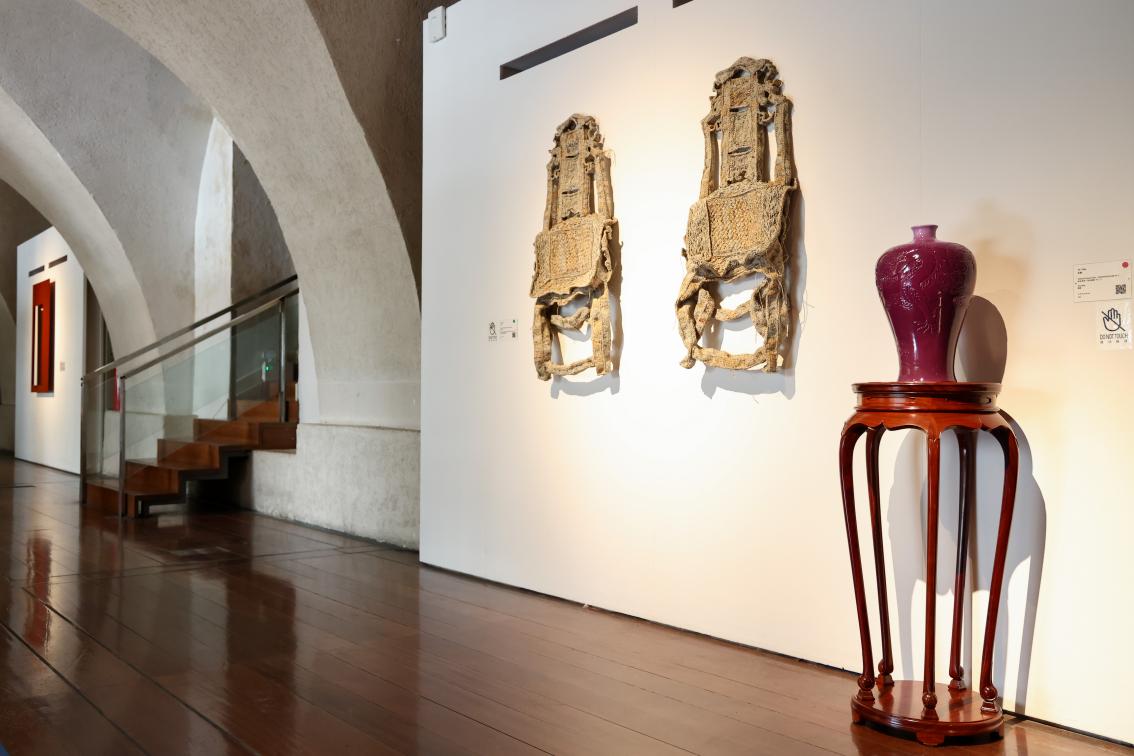
The top is made from a single solid slab known colloquially as "a single piece of jade", while the tall waist is grooved in sections and joined using the traditional shoulder-hugging tenon technique; the kunmen lines of the five legs extend gracefully, balancing solidity and openness. Originally used for offerings and daily ritual, the incense stand now serves as a subtle point of connection between object, space and state of mind, echoing the exhibition's theme of "Reflection of the Mind".
A Qin Table, a Melody of Self-Cultivation
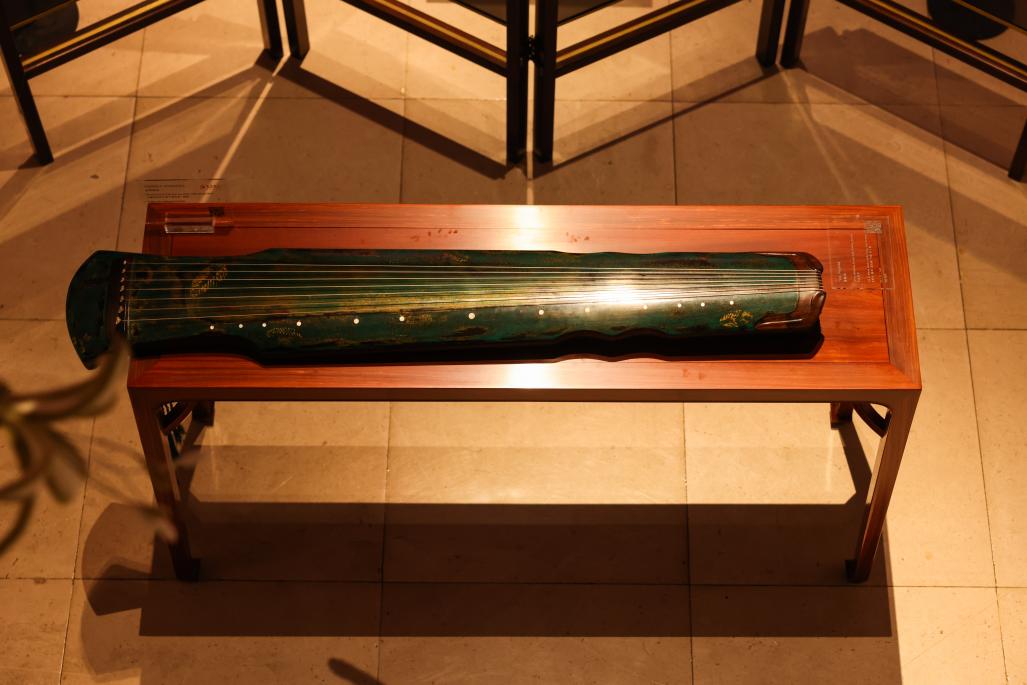
The Ming Dynasty-Style Lute (Qin) Table (Single Slab) is modelled on an original Ming dynasty table from Suzhou in the collection of the Minneapolis Institute of Art in the United States. The tabletop retains the natural grain of the single slab, while the interior incorporates a double-layer soundboard and a sound chamber with apertures, allowing the table's simple form to accommodate the playing of the qin.
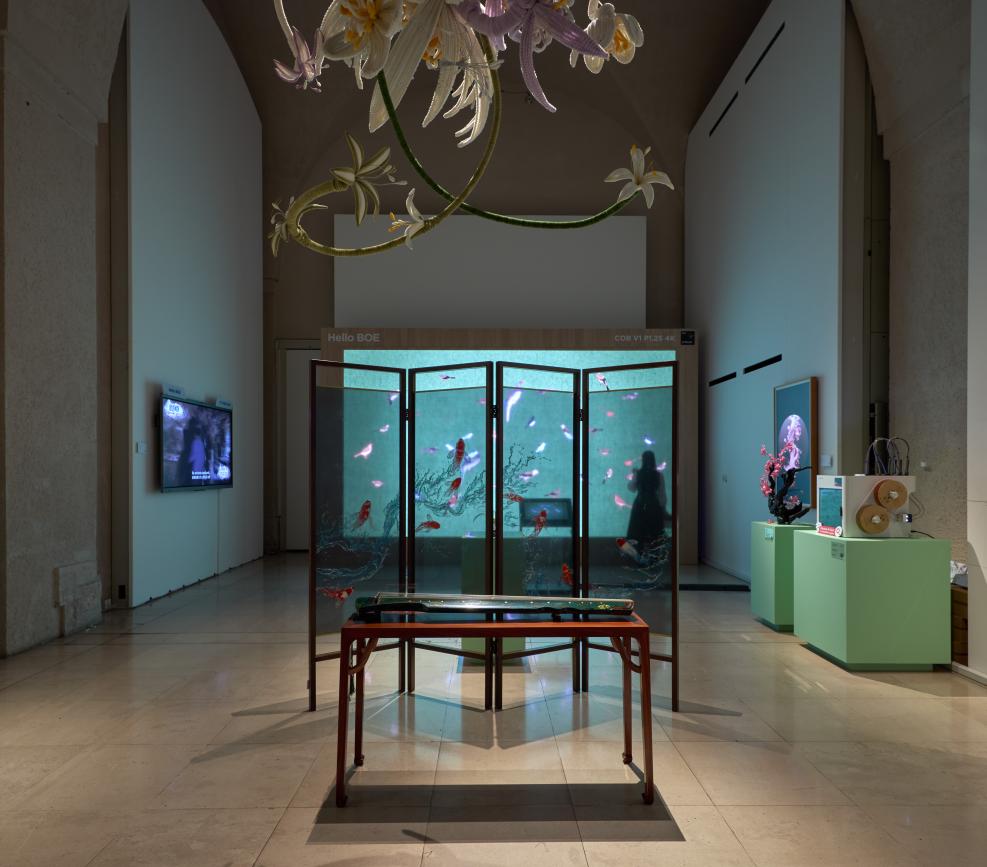
The qin table is not merely a piece of furniture; it is also connected to the everyday self-cultivation of the traditional Chinese literati. Playing the qin, sitting in stillness and contemplating the mind: objects become part of life, while also reflecting one's spiritual state. What it demonstrates is how the ancient idea that “objects carry the Way” has endured to the present through a single table.From the artistic conception of Song-dynasty painting and Ming-style furniture to contemporary reproduction practice, the three pieces bring the craftsmanship of different eras into a single exhibition space. Behind them lies Chen Daqiang and his team's long-term research into classic forms, mortise-and-tenon structures, and proportion and scale, as well as a generation of woodworking craftsmen's ongoing reflection on how tradition can move into the present.
Chen Daqiang has devoted nearly 50 years to Chinese traditional furniture making. He is an Inheritor of Intangible Cultural Heritage, Cantonese Hardwood Furniture Craftsmanship, and has received distinctions including ASIA-PACIFIC FURNITURE CRAFT MASTER and National Craftsman of China Light Industry. He also serves as Chief Compiler of the National Standard Terminology for Chinese Traditional Furniture. His focus goes beyond restoring individual pieces of furniture — he is committed to ensuring that traditional craftsmanship is documented, understood and passed on.
Founded in 1986, YONGHUA FURNITURE has, over the past 40 years, grown from a traditional furniture maker into a comprehensive enterprise spanning intangible cultural heritage collaborations, cultural and aesthetic education, and cultural and creative products designed as state gifts. The establishment of the AAA-rated national tourist attraction Yonghua Art Museum, together with the TOD complex Yonghua 1986 Creative Park currently under construction, has brought woodworking craftsmanship out of the workshop and into more open, public settings. Participation in the London exhibition continues this same approach: using specific objects as a medium to bring Cantonese craftsmanship into view within a new cultural context.
As the three wooden works travel from Lingnan to London, they carry with them not only materials and craftsmanship, but also a Chinese understanding of proportion, order, nature and the cultivation of the mind. Through the Reviving Craft exhibition in London, Cantonese woodworking will meet audiences from different backgrounds, opening a dialogue between tradition and modernity, East and West. Objects speak no words, yet through every joint and every curve, they allow us to understand the enduring vitality of traditional craftsmanship in the present day.
© Affaires Officielles